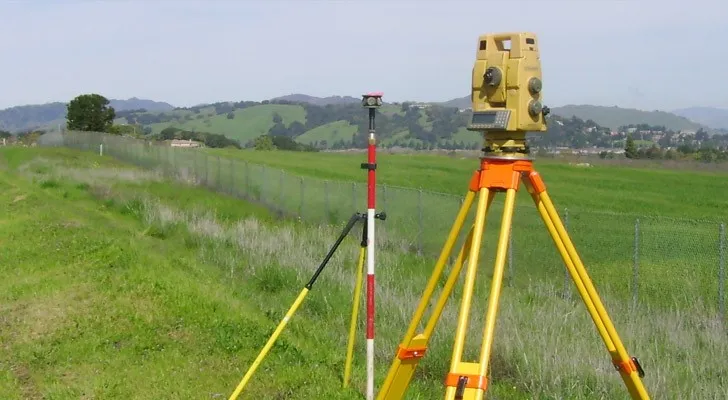
Scan to BIM Services are transforming the way
construction, architecture, and engineering projects are
planned and managed. By converting highly accurate laser
scan data into intelligent 3D Building Information Models
(BIM), professionals can visualize existing structures,
plan renovations, and manage infrastructure projects more
efficiently. These services allow engineers, architects,
and contractors to capture real-world conditions and
convert them into precise digital models that support
planning, design, and facility management.
With the increasing complexity of modern construction
projects, Scan to BIM Services provide an advanced
solution for capturing detailed building geometry and
translating it into accurate BIM models. This technology
ensures improved accuracy, reduced project risks, and
enhanced collaboration between project stakeholders.
What are Scan to BIM Services?
Scan to BIM Services involve the process of using advanced
3D laser scanning technology to capture the exact geometry
of buildings or structures and converting that data into a
detailed BIM model. Laser scanners capture millions of
data points known as a point cloud, which represents the
exact shape and dimensions of an existing structure.
These point cloud datasets are then processed and
converted into a parametric BIM model using specialized
software such as Autodesk Revit or similar BIM platforms.
The resulting digital model includes architectural,
structural, and MEP components that accurately represent
the physical building.
Scan to BIM is widely used in renovation projects,
heritage documentation, infrastructure planning, and
facility management where accurate building information is
essential.
Why Scan to BIM Services are Important for Modern Projects
The construction and infrastructure industries require
precise data to avoid costly design errors and delays.
Scan to BIM Services help bridge the gap between physical
structures and digital project planning by providing
accurate and reliable building data.
Using laser scanning technology, professionals can capture
real-world measurements with millimeter accuracy. This
eliminates the need for manual measurements and
significantly reduces the chances of design conflicts
during construction.
Another key advantage of Scan to BIM is improved project
visualization. Engineers and architects can analyze
existing structures in a 3D digital environment before
making design changes. This allows better planning, faster
decision-making, and smoother coordination among project
teams.
Process of Scan to BIM Services
3D Laser Scanning and Data Capture
The first stage of Scan to BIM Services involves capturing
the structure using high-precision laser scanning
equipment. These scanners capture millions of spatial data
points that create a detailed point cloud model of the
building or site.
Laser scanning ensures that every structural detail,
including walls, columns, floors, ceilings, and mechanical
systems, is recorded accurately.
Point Cloud Processing
After scanning, the collected point cloud data is
processed and cleaned to remove noise and unwanted
elements. The processed point cloud serves as the
foundation for developing the BIM model.
This step ensures the data is properly aligned and
structured for accurate modeling.
BIM Model Development
In this stage, BIM experts convert the processed point
cloud data into a 3D parametric BIM model. The model
includes architectural elements such as walls, doors,
windows, floors, and roofs, along with structural and MEP
components if required.
The BIM model allows project stakeholders to view and
analyze the building digitally with accurate dimensions
and spatial relationships.
Quality Assurance and Model Verification
Before delivering the final BIM model, quality checks are
conducted to ensure the model accurately represents the
scanned structure. The model is verified against the point
cloud data to maintain high levels of precision and
reliability.
Applications of Scan to BIM Services
Building Renovation and Retrofit Projects
One of the most common uses of Scan to BIM Services is in
renovation and retrofit projects. Existing buildings often
lack accurate documentation, which can lead to errors
during renovation work.
Scan to BIM helps capture the current condition of the
structure and create a reliable digital model that
architects and engineers can use for planning
modifications.
Heritage and Historical Building Documentation
Historic buildings require careful preservation and
accurate documentation. Scan to BIM allows experts to
digitally document heritage structures without disturbing
them.
The resulting BIM models help in restoration planning,
structural analysis, and long-term preservation.
Infrastructure and Industrial Facilities
Large infrastructure projects such as bridges, airports,
factories, and industrial plants benefit significantly
from Scan to BIM technology. The digital models help
engineers analyze existing conditions and plan upgrades or
expansions efficiently.
Facility Management
Scan to BIM also plays an important role in facility
management. Property owners and facility managers can use
BIM models to track building components, plan maintenance,
and manage building operations more effectively.
Benefits of Using Scan to BIM Services
High Accuracy and Precision
One of the biggest advantages of Scan to BIM Services is
the level of accuracy they provide. Laser scanning
technology captures precise measurements, ensuring that
the BIM model reflects the real-world structure
accurately.
Improved Project Planning
With accurate building information available in a digital
format, architects and engineers can plan their projects
more effectively. This reduces design conflicts and
improves overall project efficiency.
Faster Project Execution
Traditional measurement and documentation methods can take
weeks. Scan to BIM technology speeds up the data
collection process and provides faster modeling results.
Better Collaboration
BIM models allow architects, engineers, and contractors to
work on a shared digital platform. This improves
coordination between teams and ensures that everyone works
with the same accurate data.
Cost and Time Savings
By identifying design issues early in the project, Scan to
BIM helps prevent costly errors during construction. This
leads to significant savings in both time and project
costs.
Industries That Use Scan to BIM Services
Several industries benefit from Scan to BIM Services,
including:
- Architecture and building design
- Construction and infrastructure development
- Real estate and property management
- Industrial plant engineering
- Heritage conservation projects
- Facility management and maintenance
These services are particularly useful when working with
existing buildings where accurate measurements and
structural details are critical.
Why Scan to BIM is the Future of Construction Technology
Digital transformation is rapidly changing the
construction industry. Technologies like 3D laser
scanning, point cloud modeling, and BIM are helping
professionals move from traditional documentation methods
to intelligent digital workflows.
Scan to BIM services enable engineers and architects to
create highly accurate digital twins of real-world
structures. These digital models improve design accuracy,
enhance project coordination, and support better lifecycle
management of buildings.
As construction projects continue to grow in complexity,
the demand for accurate building data will increase. Scan
to BIM technology will play a vital role in improving
efficiency, reducing risks, and ensuring successful
project delivery.
Frequently Asked Questions
1. What are Scan to BIM Services?
Scan to BIM Services convert 3D laser scan data into
accurate Building Information Models used for planning,
design, and construction projects.
2. How does Scan to BIM technology work?
It uses laser scanners to capture point cloud data of
existing structures and converts it into detailed BIM
models using specialized software.
3. What industries use Scan to BIM Services?
Architecture, construction, engineering, infrastructure
development, and facility management industries commonly
use Scan to BIM services.
4. What are the benefits of Scan to BIM modeling?
Scan to BIM improves project accuracy, reduces design
errors, speeds up planning, and enhances collaboration
among project teams.
5. Why choose professional Scan to BIM Services?
Professional Scan to BIM services ensure precise digital
models that help architects and engineers plan projects
more efficiently and accurately.